
College Park Concrete Driveway Maintenance Tips
A properly installed concrete driveway in College Park, Georgia should last 30–50 years. Whether yours reaches the high end of that range depends largely on what you do — and don’t do — in the years after installation. Georgia’s specific climate conditions create maintenance priorities that differ from northern markets. Hot summers, UV exposure, 52 inches of annual rainfall, and Georgia red clay soil beneath the slab all create specific vulnerabilities that a simple maintenance routine addresses. In this post, we cover the concrete driveway maintenance practices that matter most for College Park homeowners.
Need Driveway Sealing or Repair in College Park?
We handle maintenance, sealing, and crack repair throughout College Park. Call (888) 376-0955.
Why Concrete Driveway Maintenance Matters in College Park
College Park’s climate is harder on concrete surfaces than most homeowners realize. UV radiation from March through October breaks down the cement paste in the surface layer, causing a process called surface scaling where the top layer flakes and erodes. The 52 inches of annual rainfall, concentrated in summer thunderstorms, carries water into any unsealed cracks and joints, accelerating crack widening and eroding the clay soil base beneath the slab. Summer heat cycling causes the concrete to expand and contract daily, stressing the control joints and any pre-existing cracks.
None of these forces cause catastrophic failure in a single season. But over 5–10 years without maintenance, they accumulate — producing a driveway that looks weathered and aged long before its time and, in the worst cases, developing structural problems that require repair or replacement. A simple maintenance routine — primarily focused on sealing and crack management — interrupts these processes and dramatically extends driveway life.
Why Concrete Driveway Maintenance Is Different Here
College Park homeowners face a soil factor that makes driveway maintenance more consequential than in stable-soil markets: Fulton County’s red clay expands and contracts seasonally beneath the driveway. When water infiltrates cracks in an unsealed driveway, it saturates the clay beneath, accelerating the expansion cycle that causes the crack to widen further. A 1/4-inch crack that gets ignored for two wet seasons in College Park can become a 1/2-inch crack that now requires more substantial repair.
This soil-moisture-crack interaction is why prompt crack filling is more important in College Park than in regions with stable, non-expansive soils. In sandy or stable soil markets, a small crack can sit unchanged for years. In College Park on red clay, a small crack is a moisture pathway that accelerates the soil movement that worsens the crack.
Types of Concrete Driveway Maintenance
Sealing is the single highest-value maintenance task for a College Park concrete driveway. A penetrating silane-siloxane sealer (for plain concrete) or an acrylic sealer (for stamped concrete) protects the surface from UV degradation, reduces moisture absorption, and resists oil and stain penetration. Plain concrete driveways in College Park should be sealed every 3–5 years. Stamped concrete benefits from resealing every 2–3 years to maintain color and surface protection.
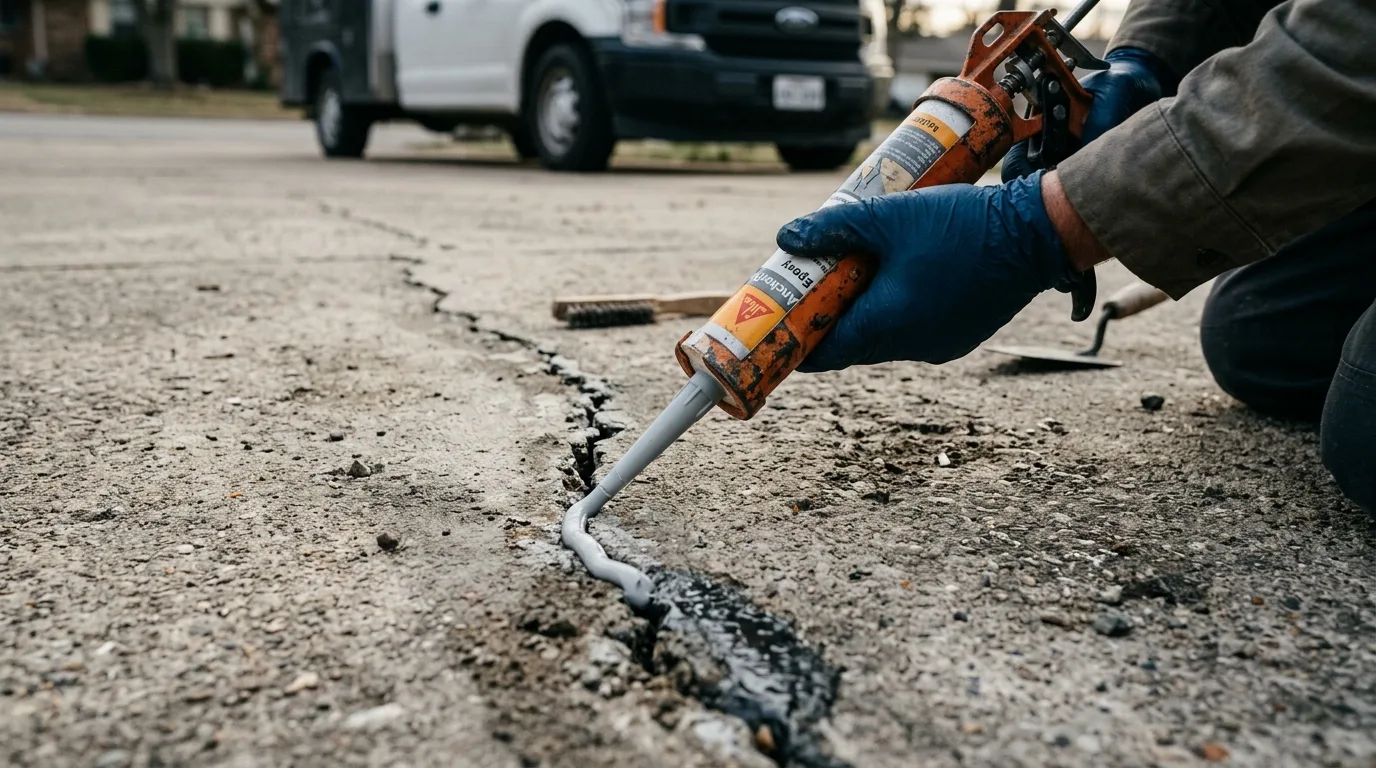
Crack filling should happen as soon as cracks exceed 1/4 inch in width. Polyurethane or epoxy crack filler is injected or poured into the crack to seal out moisture and prevent widening. In College Park’s clay soil environment, crack filling that addresses moisture infiltration is also addressing the soil erosion mechanism beneath the crack. Small cracks cost $50–$150 per location to fill professionally; ignored cracks that widen and allow base erosion require significantly more expensive repair.
Joint maintenance — the control joints cut into the driveway at installation — should be kept clean and filled with flexible sealant that allows joint movement without admitting water. Deteriorated joint sealant is the most commonly skipped maintenance task on College Park driveways and one of the most important for preventing water infiltration to the base.
Cleaning is straightforward. Occasional rinsing with a garden hose removes most surface dirt. Oil stains should be treated promptly with a commercial concrete degreaser before they penetrate the surface. Pressure washing at moderate pressure (1,200–1,500 PSI) is safe for sealed concrete. Avoid using harsh chemicals including muriatic acid for routine cleaning — it damages the surface layer and accelerates the scaling process.
Practical Uses for Concrete Driveway Maintenance
- Annual inspection: Walk your driveway twice a year — spring and fall — looking specifically at control joints, driveway edges, and any areas where cracking appeared previously. Early detection means smaller, cheaper interventions.
- Post-winter sealing: Spring is the ideal time to apply a new sealer coat in College Park, after the mild winter rainy season and before summer UV exposure. College Park’s mild winters mean freeze-related damage is rare, but the winter wet season still takes its toll on unsealed concrete.
- Edging and drainage maintenance: Keep the edges of the driveway clear of soil and vegetation that can trap moisture against the concrete edge. Positive drainage away from the edge prevents the chronic moisture saturation that accelerates clay movement beneath the perimeter.
- Garage door sill sealing: The joint between the driveway and the garage floor slab is a common entry point for water. Keeping this joint sealed prevents water from entering the garage and potentially undermining the sub-base at the slab transition.
- Oil and fluid management: Address oil drips from vehicles promptly. Fresh oil is easy to clean; cured oil that has penetrated unsealed concrete is nearly impossible to remove without surface preparation. For significant staining, a commercial degreaser and light surface scrubbing can remove most of the stain before sealing.
- Post-storm driveway check: After College Park’s heavy summer thunderstorms, check that water is draining away from the driveway and not pooling against the garage door or the slab edges. Persistent ponding after storms indicates a drainage grading issue that should be addressed before it causes base erosion.
Concrete Driveway Maintenance in College Park
We provide sealing, crack filling, and joint maintenance for College Park driveways. Call (888) 376-0955.
When Maintenance Becomes Repair
Maintenance keeps a structurally sound concrete driveway in good condition. When structural problems appear — sections that have settled significantly, widespread cracking that can’t be addressed with crack filler, or surface spalling that exposes the aggregate beneath — maintenance has given way to repair or replacement.
College Park concrete driveways that were installed without adequate base preparation on red clay often reach the “repair vs. replace” decision faster than properly installed driveways — typically 10–15 years after installation rather than 30–50. At that point, the question becomes whether targeted repair (mudjacking to lift settled sections, partial replacement of damaged areas) or full replacement with proper base prep is the better long-term investment.
For driveways that are 15+ years old in College Park, an honest assessment of the base preparation that was used at installation is the starting point for that decision. We provide free assessments that include this evaluation.
Frequently Asked Questions
How often should I seal my concrete driveway in College Park, GA?
Plain concrete driveways in College Park should be sealed every 3–5 years. Stamped concrete driveways benefit from resealing every 2–3 years to maintain color and surface protection in Georgia’s UV-intensive climate. The easiest way to check whether your driveway needs sealing is the water test: if water beads on the surface, the sealer is still working. If water absorbs into the surface, it’s time to reseal. See our concrete driveway installation page for more on sealing as part of the installation process.
What should I do about cracks in my College Park concrete driveway?
Fill cracks promptly when they reach 1/4 inch in width using polyurethane or epoxy crack filler. In College Park’s red clay environment, cracks are moisture pathways that accelerate the soil movement beneath the driveway, causing cracks to widen faster than they would in stable-soil markets. Professional crack filling costs $50–$150 per location; DIY polyurethane crack filler is available at home improvement stores for minor cracks. For cracks that are actively growing, a professional assessment is warranted to determine whether a structural issue needs to be addressed. See our concrete repair page for more on repair options.
How do I know when it’s time to replace rather than maintain my College Park driveway?
Signs that a College Park concrete driveway needs replacement rather than continued maintenance include: widespread cracking across most of the surface, settled sections that have dropped more than 1–2 inches, surface spalling that exposes aggregate across large areas, and a known history of inadequate base preparation that has produced progressive structural failure. If your driveway is under 20 years old and showing widespread structural problems, it’s likely a base prep issue that replacement with proper preparation will solve. See our concrete driveway cost guide for replacement pricing in College Park.
Concrete Driveway Care in College Park, GA
Call College Park Concrete at (888) 376-0955 for driveway sealing, crack repair, and honest maintenance advice.
Related: