
College Park Stamped Concrete Patios: Options & Costs
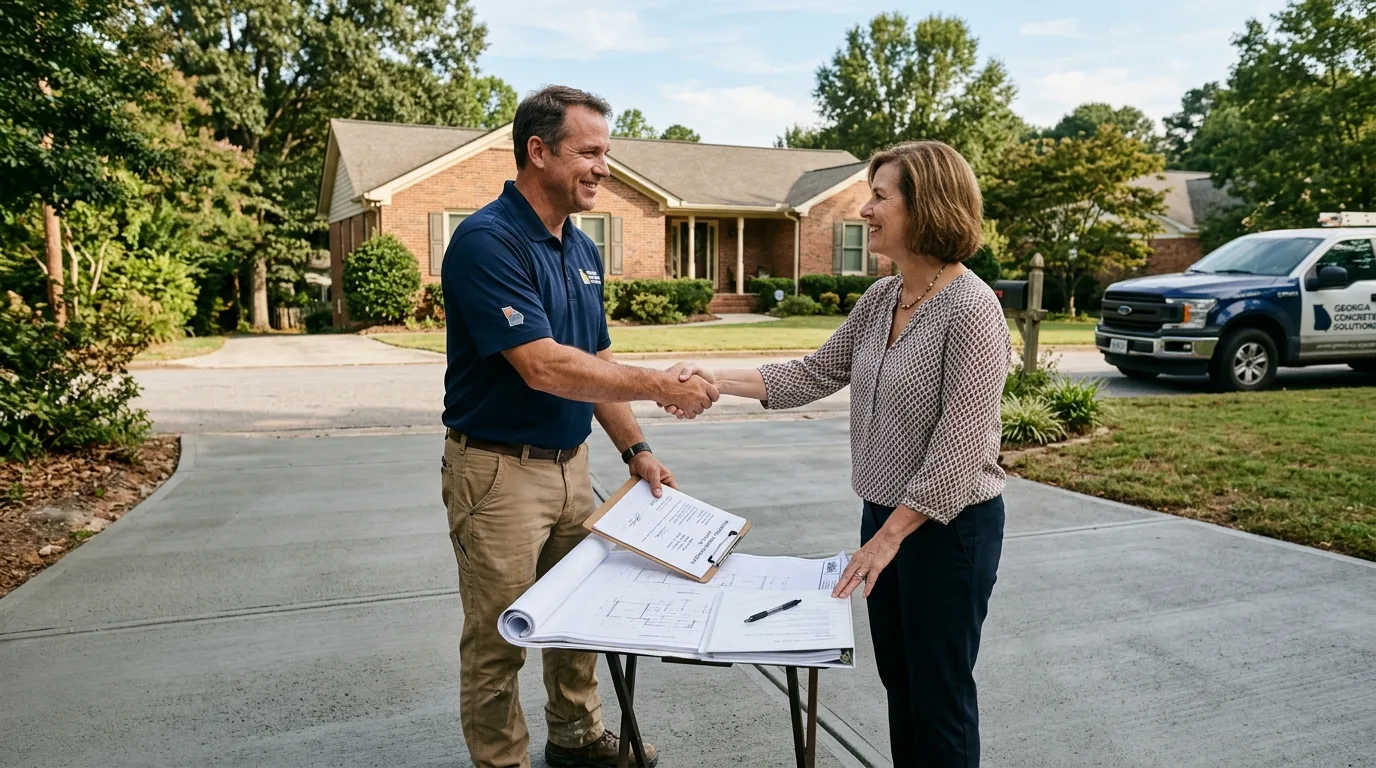
Stamped concrete patios have become one of the most popular backyard upgrades in College Park, Georgia — and for good reason. They deliver the look of natural stone or brick at a fraction of the cost, require less maintenance than pavers, and hold up well in Georgia’s climate when installed correctly. In this post, we cover the stamped concrete options available to College Park homeowners, what they cost, and what to know about maintaining a stamped concrete patio through Georgia’s hot, humid summers.
Get a Stamped Concrete Patio Estimate in College Park
Call (888) 376-0955 for pattern samples and a free written estimate for your backyard.
Why Stamped Concrete Works Well in College Park Backyards
College Park’s backyards range from the established tree-shaded lots of the Historic College Park District to newer properties in the College Park South area near the airport. Stamped concrete adapts well to both contexts — it can replicate the weathered brick look appropriate for historic district aesthetics or the clean slate-pattern look popular in modern outdoor living spaces.
Georgia’s climate creates one meaningful consideration for stamped concrete: the sealer that protects the surface and maintains color vibrancy needs to be reapplied every 2–3 years in College Park’s UV-intensive, humid environment. Without resealing, stamped concrete loses color, becomes slippery when wet, and the surface becomes vulnerable to staining and moisture penetration. This maintenance requirement is manageable — it’s far less than what pavers require in terms of weed control, joint sand replacement, and resetting — but it’s worth factoring into your decision.
Types of Stamped Concrete Patterns Available
Ashlar slate is the most popular stamped concrete pattern in College Park, replicating the look of large rectangular slate tiles. It reads as formal and architectural, and works particularly well for covered patio areas and outdoor dining spaces. Single-color ashlar slate runs $10–$14 per square foot.
Random stone patterns replicate natural fieldstone or flagstone, with irregular shapes and varied sizing. This pattern works well for naturalistic landscapes and properties with mature trees and garden beds. Random stone stamping requires more labor for the irregular layout — expect $12–$16 per square foot.
Herringbone or running bond brick patterns replicate clay brick and are well-suited to the historic architectural context of College Park’s older neighborhoods. Brick-pattern stamped concrete can use red or buff color hardener to closely approximate real brick. Pricing runs $10–$14 per square foot for standard brick patterns.
Wood plank texture replicates deck boards in concrete — a popular choice for pool surrounds and outdoor living areas where the homeowner wants a wood aesthetic with concrete durability. The textured surface also provides better slip resistance than smooth concrete. Pricing runs $11–$15 per square foot.
Multi-pattern combinations — for example, a large-format ashlar field with a running bond border — add design interest at higher labor cost. Budget $14–$18 per square foot for combination pattern work.
Practical Uses for Stamped Concrete Patios in College Park
- Outdoor dining areas: A 200–300 square foot stamped concrete patio near the back door handles outdoor dining year-round in College Park’s mild climate. This is the most common stamped concrete application — budget $2,000–$5,400 for this size.
- Full backyard living spaces: Larger patios (400–600 sq ft) with integrated seating walls, fire pit area, and outdoor kitchen pads cost $4,000–$10,800. These transform College Park backyards into year-round entertainment spaces.
- Pool surrounds: Stamped concrete around a pool provides a non-slip surface that’s cooler than bare concrete and more aesthetically unified than poured concrete. This application benefits from a pattern that provides texture — wood plank or slate are popular choices.
- Front entry walks and stoops: Stamped concrete entry walks and front stoops can elevate a home’s curb appeal, particularly for properties in the Historic College Park District. Front entry work typically runs 80–120 square feet — $800–$2,160.
- Covered porch extension: A stamped concrete slab under a new pergola or covered porch provides a finished floor that complements the architecture and handles rain exposure. These projects often combine with the pergola construction for a single coordinated project.
- Side yard paths and steps: Connecting different areas of the property with stamped concrete paths and steps gives the yard a cohesive, finished look at relatively modest cost per linear foot.
Color Options for Stamped Concrete in College Park
Stamped concrete color comes from color hardener — a dry-shake powder broadcast onto the surface before stamping — and release agent that creates contrast in the pattern recesses. The combination creates the dimensional look that makes stamped concrete convincing as stone or brick.
Popular color combinations for College Park homes include earth tones (buff, tan, brown) that complement Georgia’s red clay landscape and brick architecture, gray tones that read contemporary and pair well with modern home styles, and red-toned combinations that closely approximate brick. An accent color (the release agent tint) lighter or darker than the base creates depth in the pattern.
Color hardener and release agent combinations are available in dozens of options — we bring samples to every estimate appointment so you can see the colors against your home’s exterior before committing.
See Stamped Concrete Samples in College Park
We bring pattern and color samples to your estimate visit. Call (888) 376-0955 to schedule.
Stamped Concrete Maintenance in Georgia’s Climate
Georgia’s UV exposure is the primary reason stamped concrete in College Park needs more frequent resealing than in less sunny markets. College Park receives strong direct sun from March through October, and UV radiation breaks down the acrylic sealer that protects the surface and maintains color. Resealing every 2–3 years keeps the surface protected and colors vibrant.
Signs that a stamped concrete patio needs resealing: the color looks faded or chalky, water no longer beads on the surface, or the texture feels rough or powdery rather than smooth. Resealing is a DIY-feasible task for homeowners comfortable with a pump sprayer and brush, or we can include it as a maintenance service.
Cleaning is straightforward — occasional rinsing with a hose and light scrubbing with a soft brush for stains. Pressure washing at low pressure (under 1,500 PSI) is safe for sealed stamped concrete. Avoid using harsh chemicals or high-pressure washing that can strip the sealer.
Frequently Asked Questions
How much does a stamped concrete patio cost in College Park, GA?
Stamped concrete patio installation in College Park runs $10–$18 per square foot depending on pattern complexity, color choices, and site preparation requirements. A 400-square-foot patio costs $4,000–$7,200. Plain broom-finish concrete patios cost significantly less — $4–$8 per square foot — but lack the decorative appeal. Contact us for a free estimate that includes pattern samples and color options for your College Park backyard.
How long does stamped concrete last in Georgia?
A properly installed stamped concrete patio in College Park lasts 25–40 years with regular maintenance. The concrete itself lasts as long as a plain slab — the sealer is what requires periodic attention. Resealing every 2–3 years in Georgia’s climate maintains color vibrancy and surface protection. Stamped concrete that hasn’t been resealed in 5+ years may show color fade but is structurally sound — it can be cleaned, prepped, and resealed to restore its appearance. See our concrete patio installation page for more on installation and maintenance.
Can stamped concrete get slippery when wet?
Standard stamped concrete can be slippery when wet if the sealer is a high-gloss type. We recommend semi-gloss or matte sealers for exterior applications in College Park, which reduce glare and provide better wet traction. Adding anti-slip additive to the sealer is an option for pool surrounds and other areas with frequent wet traffic. Texture in the stamp pattern itself also contributes to traction — more textured patterns like slate and wood plank are less slippery than smooth patterns.
Stamped Concrete Patios for College Park Backyards
Call College Park Concrete at (888) 376-0955 for pattern samples and a free written estimate.
Related: